All posts by Kunal Jha

Mastering Instagram’s Algorithm: Tips, Strategies, and Hacks for 2024

Instagram’s latest updates emphasize authentic content, deeper engagement, and strategic use of interactive features. To succeed, you need a tailored content strategy that aligns with the new algorithm while leveraging hacks that can boost visibility. Here’s a comprehensive guide on how to optimize your posts, engage your audience, and grow your organic reach.


Latest Instagram Algorithm Trends and Strategies

1. Reels: The Fast Track to Engagement

Reels remain a top priority for Instagram, offering high visibility and engagement. Here’s how to make the most of it:

  • Hacks:
    • Use trending audio tracks to increase your Reel’s discoverability. If a particular sound or music clip is going viral, incorporate it into your content.
    • Add captions and interactive text overlays to make Reels accessible and hold attention.
    • Post Reels directly to your main feed as well as the Reels tab to gain maximum traction.
    • If users replay your Reels, it now counts toward total views—encourage creative looping videos to take advantage of this.
  • Execution Tip:
    Craft Reels that either entertain or offer actionable advice. Viewers are more likely to engage with videos that provide value or a sense of surprise.

2. Static Posts: An Unconventional Strategy

Though video is in focus, static posts are seeing a resurgence. Eye-catching images and carousel posts can provide a refreshing break from short-form videos.

  • Hacks:
    • Use vibrant, high-resolution visuals with minimal text to stand out.
    • Combine static images with engaging captions that prompt users to comment or save your post.
    • Carousel posts increase swipe-through time, signaling the algorithm to push your content.
  • Execution Tip:
    Use carousel posts to tell stories or showcase product ranges—encouraging users to explore every slide.

3. Community Engagement is Key

Interactions such as comments, likes, saves, and shares are vital signals for Instagram’s algorithm. High engagement directly increases your post’s visibility.

  • Hacks:
    • Use pinned comments to highlight engaging discussions and encourage more participation.
    • Create interactive Stories using polls, quizzes, or “Add Yours” stickers to spark conversations.
    • Reply to every comment and DM within the first hour of posting—Instagram values immediate engagement.
  • Execution Tip:
    Host challenges, giveaways, or collaborative campaigns to incentivize user interaction.

4. Optimize Timing and Frequency

Posting when your audience is active is essential for driving immediate engagement.

  • Hacks:
    • Experiment with different posting times using Instagram Insights to find peak engagement windows.
    • Post consistently, starting with one post per day, and gradually increase frequency based on your audience’s response.
    • Use third-party tools to automate posting during high-traffic periods.
  • Execution Tip:
    Engage with your followers before and after posting to boost visibility. Instagram tends to promote posts with early activity.

5. Utilize Stories and Interactive Features

Stories are powerful tools for engagement. They offer a chance to post casual, real-time updates while keeping your audience engaged.

  • Hacks:
    • Use countdown stickers for product launches or announcements to generate anticipation.
    • Post behind-the-scenes clips or polls to build authenticity and invite audience participation.
    • With the new feature, you can tag people even after posting Stories, ensuring you never miss a chance to engage with others.
  • Execution Tip:
    Include links to external content, events, or product pages within Stories to drive conversions.

6. Leverage Instagram’s Business Tools

Instagram offers several new tools to streamline business operations and enhance visibility.

  • Hacks:
    • Use the multi-link feature in bios to direct traffic to various campaigns or resources.
    • Manage customer orders directly through DMs, simplifying the buying process.
    • Utilize promo codes in ads to attract new customers and enhance shopping experiences.
  • Execution Tip:
    Integrate Instagram’s business features with your overall marketing strategy to boost sales and engagement simultaneously.


Bonus Hacks to Outperform the Algorithm

  1. Use the ‘Unicorn Strategy’:
    Identify trending posts from similar accounts and replicate their success by adding your unique twist. This helps you stay relevant while differentiating your content.
  2. Collaborate with Micro-Influencers:
    Partnering with influencers with smaller, engaged followings can help you reach new audiences organically.
  3. Create Save-Worthy Content:
    Posts that users save are favored by the algorithm. Offer downloadable guides, checklists, or inspirational posts that users would want to revisit later.
  4. Experiment Boldly:
    Try unconventional content formats or post types. Test ideas freely—Instagram’s algorithm favors accounts that consistently innovate.

Conclusion: Stay Agile and Evolve with Instagram

Instagram’s algorithm encourages creators and businesses to prioritize meaningful engagement, creativity, and consistency. To thrive in 2024, experiment with Reels, diversify content formats, and actively engage with your audience. Incorporate business tools for a streamlined experience, and stay informed about the platform’s evolving features.

Visual Aids for Strategy Planning

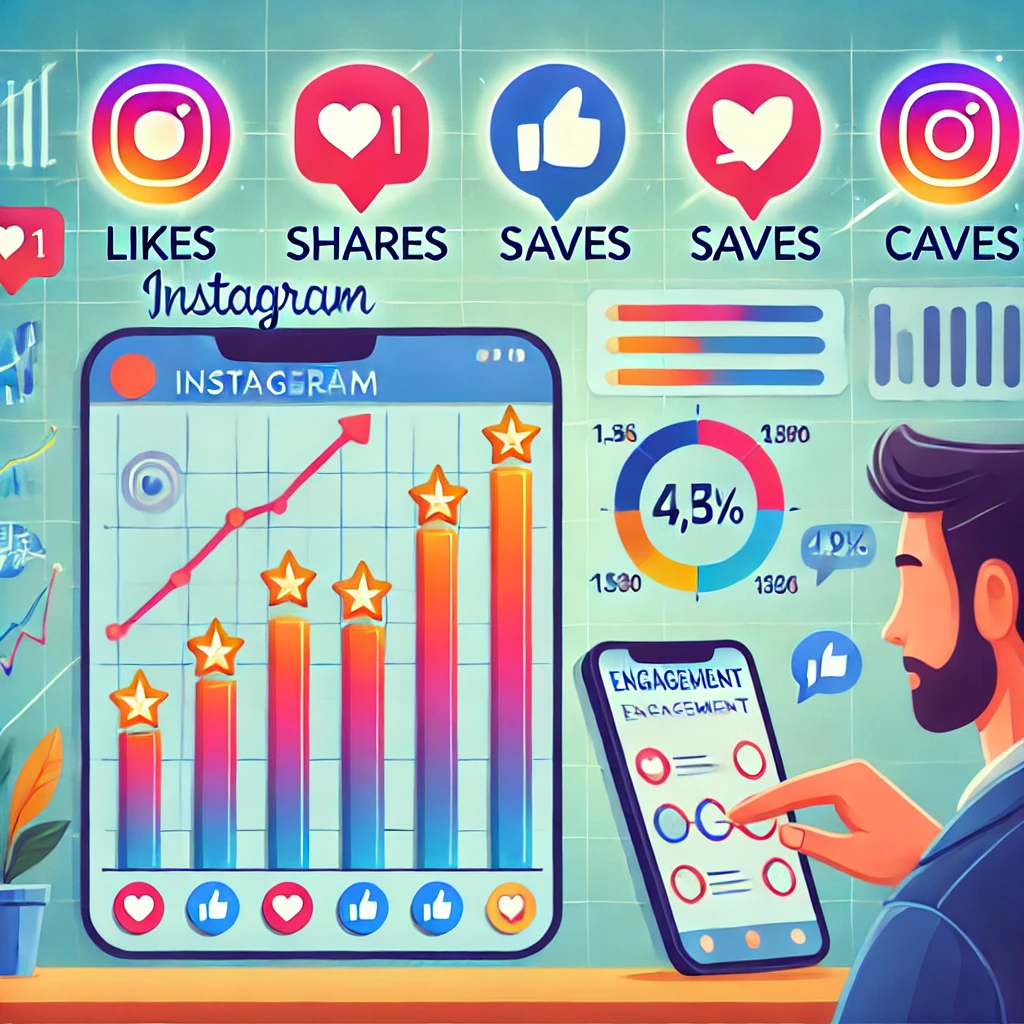
Here are two images that visualize critical aspects of Instagram growth:

These visuals highlight the importance of monitoring analytics and carefully planning your content strategy to align with Instagram’s changing dynamics. Use these insights to refine your approach and enhance your organic reach.

Google Ads Bidding Strategies: Mastering the 2024 Landscape

Introduction to Google Ads Bidding Strategies

Google Ads is an essential platform for businesses to reach target audiences efficiently. Bidding strategies are pivotal to how campaigns perform, impacting ad visibility, cost efficiency, and conversion rates. In 2024, Google Ads has refined its automated bidding models, making it critical for advertisers to understand and leverage these strategies for optimal results.

This blog explores the latest bidding strategies, including Maximize Conversions, Target CPA (Cost per Acquisition), tROAS (Target Return on Ad Spend), and manual bidding strategies, and how these updates reflect broader shifts toward machine learning and AI-powered optimization.


1. Automated Bidding: The Rise of Smart Bidding Models

Smart Bidding models have become the cornerstone of Google Ads, with AI-powered optimization now driving the bulk of bidding decisions. Google’s algorithms analyze user behavior, historical data, and real-time trends to adjust bids dynamically.

Key automated bidding strategies include:

  • Maximize Conversions: Automatically sets bids to drive as many conversions as possible within your budget.
  • Target CPA: Focuses on achieving conversions at a specific cost per acquisition.
  • Maximize Conversion Value: Optimizes for the highest possible return based on conversion value, making it useful for e-commerce businesses.

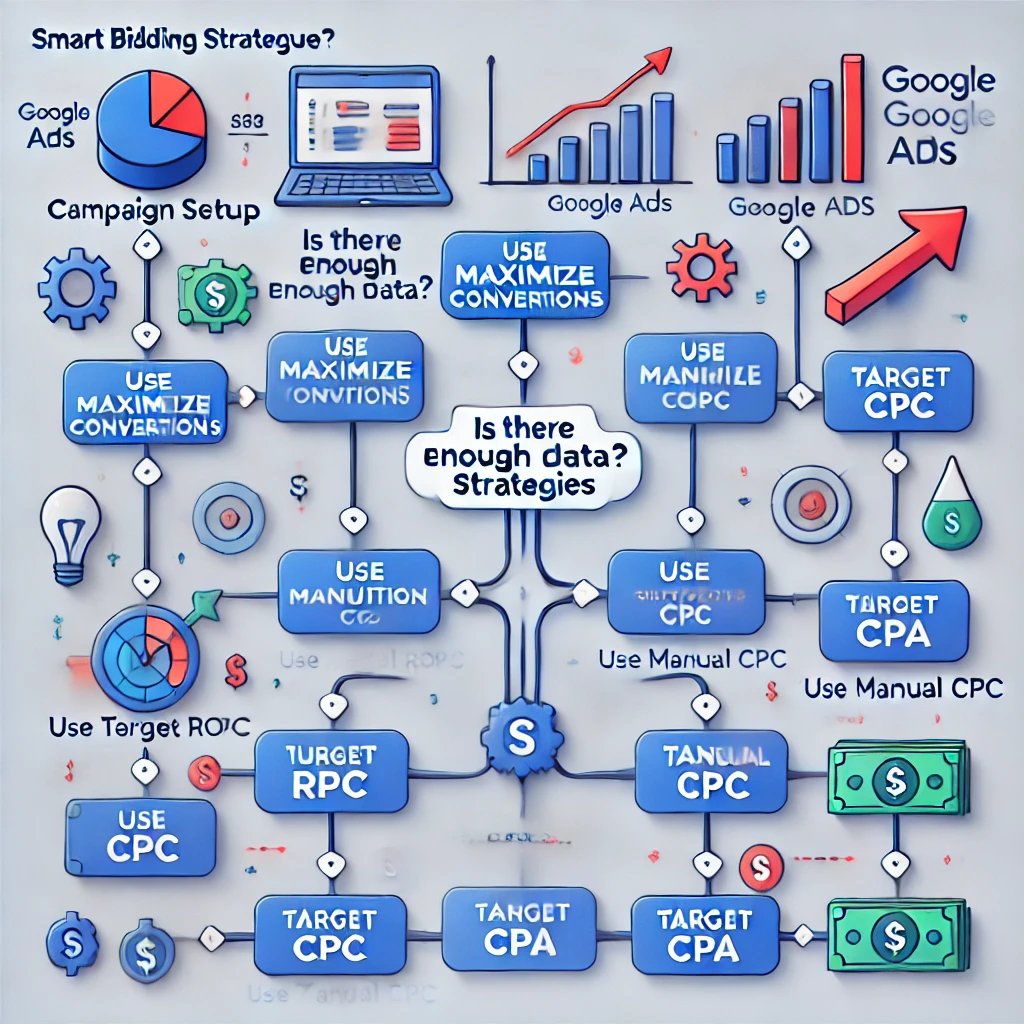
Google recommends starting with Maximize Conversions, then transitioning to Target CPA or tROAS once campaigns accumulate sufficient data (at least 50 conversions) for reliable optimization.


2. Manual vs Automated Bidding: Which One to Choose?

Although automated bidding simplifies campaign management, some advertisers prefer manual CPC bidding for greater control. However, with Enhanced CPC being phased out by March 2025, advertisers will need to transition towards other forms of automation or use Manual CPC in specific scenarios requiring precision (Zorbis, 2024).

Manual bidding is still valuable when experimenting with new campaigns or when granular control over individual keywords or ad groups is necessary. It also helps in niche industries where Google’s algorithms may need more training data to optimize effectively.


3. Leveraging Audience and Location Targeting

Google Ads in 2024 places a stronger emphasis on custom audience segmentation and location targeting.

  • Audience Targeting: Adjusting bids based on audience segments is a key strategy. For example, advertisers can bid higher for visitors who previously added items to their shopping carts or showed interest in high-value products (Partnerkin, 2024).
  • Location Targeting: Customizing bids based on geographic performance remains essential. If certain regions convert better, businesses can increase bids for those areas while lowering them in underperforming locations.

4. Time and Device Bid Adjustments

Adjusting bids by time of day or device type helps advertisers fine-tune campaigns. For example:

  • Increase bids during peak conversion hours (e.g., business hours for B2B campaigns).
  • Bid more aggressively on mobile devices if data shows higher engagement from mobile users. Conversely, reduce bids on tablets if conversions are consistently low.

Seasonal adjustments also play a critical role in industries like retail, where ad performance fluctuates during holidays and major shopping events.


5. Remarketing Bidding Strategies: Bringing Visitors Back

Remarketing remains an effective way to re-engage users. In 2024, dynamic remarketing is gaining traction, enabling businesses to target users with tailored ads based on their previous interactions with products or services. Advertisers can increase bids for high-value audiences—like those who browsed expensive products—and decrease bids for less-engaged visitors (Google Ads, 2024).


6. Best Practices for Google Ads Bidding in 2024

To maximize returns, advertisers need to experiment and adapt their bidding strategies based on performance data. Here are some actionable tips:

  • Monitor campaign performance regularly: Track conversion rates, CPA, and ROAS to identify trends.
  • Use Google Analytics audience segments: Import data to refine targeting and bidding.
  • A/B test bids: Experiment with different strategies to find the best approach for each campaign type.
  • Adapt to seasonal trends: Shift bidding strategies according to seasonal traffic patterns and adjust ad formats based on user behavior.

Conclusion: Navigating Google Ads Bidding in 2024

Google’s focus on automation and machine learning has made smart bidding strategies essential for businesses aiming to stay competitive. While automated strategies reduce the workload for advertisers, understanding when and how to use manual CPC and bid adjustments remains critical. Whether your goal is to maximize conversions, optimize ROAS, or fine-tune campaigns based on location or device data, 2024 demands a data-driven, adaptive approach.

By combining automated tools with strategic oversight, businesses can optimize their ad spend and improve campaign outcomes. Staying informed about the latest updates in Google Ads will empower advertisers to make more effective decisions in this ever-changing landscape.

Mastering Instagram Marketing with AI, Data Analytics, and Algorithm Insights in 2024

Introduction

Instagram, with over 2 billion active users, has evolved into a competitive platform where businesses need more than just engaging visuals to grow. The 2024 Instagram algorithm focuses on personalized content delivery, engagement metrics, and relevance. Marketers must now leverage AI-powered tools, data-driven strategies, and in-depth knowledge of Instagram’s latest algorithm changes to succeed.

This blog dives deep into AI applications, advanced analytics, automation tools, and Instagram’s algorithm updates, helping businesses optimize their strategies and outperform competitors.


1. Instagram’s 2024 Algorithm: Key Insights

How Instagram’s Algorithm Works in 2024

The Instagram algorithm now operates across multiple surfaces—Feed, Stories, Reels, Explore, and Search—with each section following distinct ranking models. AI and machine learning play a significant role in personalizing content delivery, ensuring users see posts aligned with their interests.

Here are the latest updates influencing Instagram’s algorithm:

  • Engagement Signals: The algorithm prioritizes posts with high likes, shares, and saves to determine relevance.
  • User Activity Analysis: Instagram analyzes how users interact with posts (time spent, comments) to predict preferences.
  • Recency of Posts: Newer posts receive priority, especially for Reels and Stories, where recency drives visibility.
  • Relevance Score: Content is ranked based on how aligned it is with user behavior, hashtags, and interactions.
  • Explore and Search Ranking: Instagram’s search system uses keywords and alt text to surface relevant profiles and posts.

SEO Insight: Optimizing posts with relevant keywords and hashtags increases the chance of appearing in Explore and Search results.
How to Adapt: Post consistently, encourage comments and shares, and use AI tools to identify optimal engagement times.


2. AI-Powered Content Strategy: Automating and Optimizing Instagram Posts

AI tools are indispensable for marketers aiming to stay competitive on Instagram. From content creation to caption optimization, AI helps businesses generate creative content, automate publishing, and maximize engagement.

Tools and Tactics for AI-Optimized Content:

  • AI-Powered Captions: Use Jasper.ai or Copy.ai to generate keyword-rich, engaging captions optimized for Instagram SEO.
  • Visual Content Optimization: Platforms like Canva and Lumen5 suggest trending design layouts for posts and Reels.
  • AI for Video: Use InVideo or Lumen5 to create short-form videos aligned with trending formats.
  • Smart Scheduling: Tools like Later and Buffer use AI to predict the best time to post, based on audience activity patterns.

How It Aligns with Instagram’s Algorithm

  • Boost Relevance: AI tools suggest hashtags and captions relevant to audience interests.
  • Maintain Recency: Automated scheduling ensures posts go live when engagement is highest, improving visibility in Feeds and Stories.

3. Instagram SEO: Optimizing for Search and Explore

Instagram has evolved to function as a visual search engine, and in 2024, search optimization strategies are essential. The algorithm prioritizes profiles and posts that align with user search intent and engagement behavior.

Key SEO Tactics for Instagram:

  1. Use Keywords in Bios and Captions: Incorporate niche keywords naturally. For example, a fitness coach could include keywords like “workout tips” in their bio.
  2. Alt Text Optimization: Use Instagram’s alt text feature to describe images for both accessibility and SEO.
  3. Strategic Hashtags: Mix trending, niche, and branded hashtags using tools like Hashtagify.
  4. Keyword Monitoring: Track which keywords are driving traffic using Google Analytics integrated with Instagram.

How It Aligns with the Algorithm:

  • Search Optimization: Content with optimized keywords and alt text ranks higher in Instagram search results.
  • Better Explore Visibility: Keyword-rich posts are more likely to appear on the Explore page.

4. Leveraging AI-Powered Chatbots for Instagram Engagement

AI-powered chatbots are becoming indispensable for automating customer service and engagement on Instagram. They help businesses respond to inquiries instantly, recommend products, and guide users through the sales funnel.

How to Implement AI Chatbots on Instagram:

  • Integrate with ManyChat or Tidio: Automate responses to DMs and comments with personalized messaging.
  • Product Recommendations: AI chatbots can suggest relevant products based on user preferences.
  • Lead Generation: Use chatbots to collect contact details and guide users towards purchasing decisions.

How It Aligns with the Algorithm:

  • Engagement Metrics: Chatbots improve engagement through real-time conversations, boosting visibility.
  • Faster Responses: Quick replies reduce response time, which positively impacts Instagram’s algorithm.

5. Advanced Analytics: Data-Driven Marketing Strategies

To stay ahead on Instagram, marketers must rely on advanced analytics and predictive insights. Tracking key performance metrics helps businesses understand what resonates with their audience and optimize their campaigns.

Key Metrics to Track:

  • Engagement Rate: (Likes + Comments + Shares) / Total Followers.
  • Follower Growth Rate: New Followers / Total Followers.
  • CTR (Click-Through Rate): Percentage of users who clicked on your bio link or CTA in Stories.
  • Conversion Rate: Percentage of users who completed a desired action, like making a purchase or signing up.

AI Tools for Analytics:

  • Sprout Social: Offers detailed insights into audience behavior and post performance.
  • Iconosquare: Provides in-depth analytics for follower trends and engagement metrics.
  • Google Analytics 4: Tracks Instagram traffic and conversions from bio links and ads.

How It Aligns with the Algorithm:

  • Better Campaign Optimization: Insights from analytics allow you to refine content to match audience behavior.
  • Predictive Trends: AI-based predictive insights help marketers stay ahead of content trends.

6. Smarter Instagram Advertising with AI

AI optimizes ad targeting and bidding strategies to ensure higher ROI from campaigns. Instagram ads powered by AI deliver personalized experiences by analyzing user behavior and predicting conversion potential.

Key AI-Powered Ad Strategies:

  1. Dynamic Ad Targeting: Use Meta Ads Manager’s AI-based targeting to reach audiences based on behavior.
  2. Automated Budget Optimization: Platforms like Adext AI dynamically adjust ad budgets to maximize conversions.
  3. A/B Testing: AI tools test multiple ad variations and select the best-performing versions.
  4. Personalized Ad Creatives: AI-based platforms like Revieve generate customized ad creatives for individual users.

How It Aligns with the Algorithm:

  • Higher Ad Relevance: AI-driven personalization ensures your ads align with user interests, improving ad performance.
  • Real-Time Optimization: AI adjusts campaigns on the fly, ensuring your ads are seen by the right audience.

7. Influencer Marketing: AI-Powered Collaborations

AI tools streamline influencer marketing by identifying the most relevant influencers and predicting their impact on campaigns. With data-driven insights, brands can ensure better alignment with influencer audiences.

Key Tools and Tactics:

  • Upfluence: Discover influencers based on audience demographics and engagement rates.
  • Heepsy: Analyze influencer performance across platforms to measure ROI.
  • AI-Driven Campaigns: Platforms like Klear help brands manage campaigns and track influencer performance in real time.

How It Aligns with the Algorithm:

  • Boosted Engagement: Influencer collaborations generate more likes and shares, boosting visibility.
  • Increased Reach: Influencers help brands reach a broader audience, signaling the algorithm to promote the content.

Leveraging AI and Machine Learning in Social Media Marketing for 2024

Introduction

Social media platforms have evolved into powerful tools for brands to connect with audiences, build communities, and boost sales. In 2024, Artificial Intelligence (AI) and Machine Learning (ML) are reshaping how businesses approach social media marketing by enhancing personalization, streamlining ad campaigns, and automating content strategies. Marketers who utilize these technologies effectively can improve engagement, optimize advertising, and gain deeper insights into customer behavior.

This blog will explore how you can leverage AI and ML to maximize the impact of your social media marketing efforts in 2024.


Key AI and ML Applications in Social Media Marketing

1. AI-Powered Social Listening and Sentiment Analysis

AI tools enable businesses to track brand mentions, trends, and customer sentiment in real-time. Sentiment analysis helps marketers understand how their audience feels about their brand, products, and campaigns across various platforms.

How to Implement:

  • Use tools like Brandwatch, Hootsuite Insights, or Sprout Social to monitor social conversations.
  • Analyze customer sentiment around your campaigns, identifying areas to improve or capitalize on positive feedback.
  • Track competitor mentions to gauge industry sentiment and trends.

Benefits:

  • Better reputation management by addressing issues promptly.
  • Enhanced campaign strategies by understanding audience feedback.
  • Deeper insights into customer emotions and behavior.

2. AI-Driven Content Creation and Scheduling

AI can assist in content creation, from generating text and visuals to recommending optimal posting times. Marketers can use AI to automate the publishing process, ensuring consistent content delivery across platforms.

How to Implement:

  • Use tools like Canva, Lumen5, or Copy.ai for AI-powered visual and text content creation.
  • Implement scheduling tools like Hootsuite or Later to automate posts at optimal engagement times.
  • Experiment with AI-generated captions and hashtags to boost visibility.

Benefits:

  • Time savings with automated content creation and posting.
  • Consistent engagement through scheduled posts.
  • Increased reach with AI-optimized hashtags and captions.

3. AI-Enhanced Social Media Advertising

AI makes paid social campaigns more efficient through advanced targeting and real-time optimization. With predictive algorithms, AI ensures ads are delivered to the right audience at the right time, maximizing ROI.

How to Implement:

  • Use platforms like Facebook Ads Manager, Google Ads, or The Trade Desk for automated ad targeting.
  • Experiment with AI-based tools like Adext AI to adjust budgets and optimize bidding strategies in real-time.
  • Leverage A/B testing and AI insights to refine ad creatives.

Benefits:

  • Precise targeting based on audience behavior and preferences.
  • Real-time campaign optimization to improve performance.
  • Reduced ad spend waste and higher ROI.

4. Personalized Customer Experiences with AI

AI-powered algorithms analyze user behavior to provide personalized social media experiences. Personalized messaging, product recommendations, and dynamic content tailored to individual users help boost engagement and conversions.

How to Implement:

  • Use Dynamic Yield or Segment to track user behavior and provide personalized recommendations.
  • Integrate AI chatbots on platforms like Facebook Messenger or Instagram DMs to engage with customers in real-time.
  • Customize product feeds and stories to show relevant items to different audience segments.

Benefits:

  • Higher engagement through tailored social experiences.
  • Increased conversion rates with personalized recommendations.
  • Strengthened brand loyalty by making users feel understood.

5. Social Media Analytics and Predictive Insights

AI-driven social media analytics tools collect data from user interactions to identify trends, predict customer behavior, and measure campaign effectiveness. Predictive insights enable proactive decision-making and smarter campaign planning.

How to Implement:

  • Use platforms like Klaviyo, Socialbakers, or HubSpot to analyze social media performance.
  • Implement predictive models to anticipate future trends and user behaviors.
  • Use insights to refine your content strategy and ad campaigns for improved results.

Benefits:

  • Data-driven strategies that align with audience interests and behavior.
  • Enhanced campaign performance through trend predictions.
  • Ability to forecast engagement, helping to adjust marketing strategies proactively.

6. AI-Powered Influencer Marketing Platforms

AI helps brands identify the most relevant influencers by analyzing audience demographics, engagement rates, and content alignment. Influencer marketing platforms powered by AI ensure better collaboration between brands and influencers.

How to Implement:

  • Use platforms like Upfluence, Traackr, or Influencity to discover influencers whose audience matches your target demographics.
  • Analyze influencer content and audience engagement with AI-driven insights.
  • Measure campaign performance in real-time and adjust strategies based on data.

Benefits:

  • Improved influencer selection with data-backed recommendations.
  • Enhanced campaign performance by aligning with the right influencers.
  • Clear ROI tracking for influencer marketing efforts.

7. AI-Powered Chatbots for Social Engagement

AI chatbots play an essential role in engaging users on social platforms. They provide instant responses to customer inquiries, enhance customer service, and even guide users through the sales funnel.

How to Implement:

  • Integrate AI chatbots on platforms like Facebook Messenger or Instagram DMs.
  • Use Dialogflow or Tidio to build NLP-powered chatbots capable of handling complex conversations.
  • Design chatbots to engage users with personalized messages and product recommendations.

Benefits:

  • Faster response times, improving user satisfaction.
  • Increased engagement with automated, personalized interactions.
  • Enhanced sales with guided product recommendations.

How to Leverage AI and Machine Learning in Digital Marketing for 2024″


Introduction

Artificial Intelligence (AI) and Machine Learning (ML) are transforming the landscape of digital marketing. From predictive analytics and customer behavior tracking to AI-powered content generation and personalized marketing, AI has become a driving force behind more effective and efficient marketing campaigns. In 2024, marketers who harness AI’s full potential will outperform their competitors by delivering personalized, data-driven marketing strategies that truly resonate with their audience.

In this blog, we’ll explore how to leverage AI and machine learning to stay ahead in the world of digital marketing.


What is AI in Digital Marketing?

AI in digital marketing refers to the use of technologies that simulate human intelligence to improve and automate various marketing tasks. Machine learning, a subset of AI, allows systems to learn from data, identify patterns, and make decisions with minimal human intervention.

Common AI applications in digital marketing include:

  • Personalization engines
  • Chatbots
  • Predictive analytics
  • Content creation
  • Programmatic advertising
  • Voice search optimization

Key AI Technologies for Digital Marketing in 2024

Let’s dive into the most impactful AI technologies that are reshaping digital marketing.


1. Predictive Analytics for Targeted Campaigns

Predictive analytics uses historical data to forecast future outcomes. With machine learning algorithms, marketers can analyze past behaviors and trends to predict how their target audience will behave in the future. Predictive models help optimize marketing strategies, improving lead scoring, customer segmentation, and retention efforts.

How to Implement:

  • Use tools like Google Analytics Predictive Metrics, HubSpot AI, or Salesforce Einstein to predict customer behavior.
  • Develop a strategy to segment your audience based on predicted lifetime value, purchase intent, or churn risk.
  • Apply predictive insights to create personalized marketing campaigns, focusing on high-value prospects.

Benefits:

  • Higher conversion rates due to precise targeting.
  • Improved ROI on marketing efforts by reducing spend on less likely leads.
  • Better customer retention through predictive retention models.

2. Chatbots and Conversational AI for Customer Interaction

Chatbots have evolved from simple FAQ bots to sophisticated AI-driven conversational tools that can handle complex customer inquiries in real-time. AI-powered chatbots, such as Google’s Dialogflow or OpenAI’s GPT models, can engage with users 24/7, improving customer service, providing instant answers, and gathering customer data for better personalization.

How to Implement:

  • Integrate AI chatbots into your website, social media platforms, or mobile apps.
  • Use platforms like Tidio, Drift, or Intercom to build and customize your chatbots.
  • Train your chatbot using natural language processing (NLP) to handle a wider variety of customer queries.

Benefits:

  • Immediate response times, enhancing the user experience.
  • Improved customer engagement and satisfaction through personalized interactions.
  • Cost reduction by automating customer service tasks.

3. AI-Driven Personalization

In 2024, consumers expect personalized experiences at every touchpoint. AI algorithms analyze user behavior to deliver tailored content, product recommendations, and personalized messaging, improving customer engagement and conversion rates.

How to Implement:

  • Use tools like Dynamic Yield, Segment, or Evergage to track user behavior and deliver personalized experiences based on browsing habits, past purchases, and demographic data.
  • Email marketing platforms such as Mailchimp or HubSpot can leverage AI to send personalized messages based on the recipient’s preferences and interactions.
  • Incorporate personalized product recommendations on e-commerce sites using platforms like Nosto or LimeSpot.

Benefits:

  • Increased conversion rates as users are more likely to engage with personalized content.
  • Higher customer loyalty by delivering a tailored experience that resonates with individual users.
  • Enhanced user experience, leading to longer site visits and repeat customers.

4. AI-Powered Content Creation and Curation

AI is revolutionizing content creation by helping marketers produce relevant, high-quality content quickly. Tools like Jasper.ai, Copy.ai, and Writesonic generate blog posts, social media captions, and email newsletters in a fraction of the time it would take a human writer.

How to Implement:

  • Use AI tools like Jasper or Copy.ai to generate the first drafts of your content, which can then be edited and optimized by human writers.
  • Incorporate AI-powered content curation tools like Curata to recommend and distribute the most relevant content to your audience based on their preferences and past interactions.
  • Combine SEO strategies with AI-generated content to improve organic rankings by creating content that answers high-volume, low-competition search queries.

Benefits:

  • Increased content production speed, allowing you to publish more frequently.
  • Cost savings by automating the content creation process.
  • SEO-optimized content generation based on real-time data analysis.

5. Programmatic Advertising with AI

Programmatic advertising uses AI to automate the buying of ads, targeting more specific audiences and optimizing ad placements in real time. This allows marketers to maximize ad spend and achieve higher ROIs on digital ad campaigns.

How to Implement:

  • Use Google Ads, Facebook Ads Manager, or The Trade Desk to automate your programmatic advertising campaigns.
  • Utilize AI-driven ad platforms to adjust your bidding strategies in real time and allocate your ad budget based on performance.
  • Leverage AI to automatically optimize your ad creatives based on user engagement data.

Benefits:

  • Real-time optimization, ensuring your ads reach the right people at the right time.
  • Better targeting, reducing wasted ad spend by focusing on high-value customers.
  • Higher ROI, as AI adjusts campaigns dynamically for the best performance.

6. Voice Search Optimization

As more users rely on voice search to find products and services, optimizing for voice search has become essential. AI voice assistants like Siri, Alexa, and Google Assistant have changed the way users interact with search engines, prioritizing natural language queries.

How to Implement:

  • Focus on long-tail keywords and conversational phrases in your SEO strategy.
  • Optimize for local SEO, as many voice searches are location-based queries like “best pizza place near me.”
  • Use structured data (schema markup) to help search engines understand the context of your content for voice queries.

Benefits:

  • Increased visibility in voice search results.
  • Enhanced user experience for customers using smart devices.
  • Higher traffic from organic voice search queries.

7. AI-Driven Customer Insights

AI tools can analyze customer behavior, purchase patterns, and social media activity to provide detailed insights into your target audience. AI-driven customer analytics platforms like Klaviyo or Mixpanel can predict customer preferences, helping you tailor your marketing efforts more effectively.

How to Implement:

  • Leverage AI-driven analytics platforms like Tableau or Klaviyo to gain insights into user behavior.
  • Use social listening tools like Brandwatch or Hootsuite to monitor customer sentiment and improve your social media strategy.
  • Implement AI-powered customer journey mapping tools to predict customer needs and optimize touchpoints.

Benefits:

  • Better understanding of customer preferences and behavior.
  • Data-driven marketing campaigns that resonate with your audience.
  • Higher engagement and conversion rates by personalizing the customer journey.

How to Implement Technical SEO: A Complete Guide for 2024″


Introduction

In the world of digital marketing, Technical SEO is a critical but often overlooked component that can significantly affect your website’s search engine ranking. While content and backlinks play important roles, technical SEO ensures that search engines can efficiently crawl and index your site, delivering the best possible user experience. This guide will dive deep into the technical aspects of SEO, offering you step-by-step instructions to optimize your site for 2024.


What is Technical SEO?

Technical SEO refers to the process of optimizing your website for the crawling and indexing phase of search engine optimization. It involves configuring the technical elements of your website to improve its visibility and rank higher on search engine result pages (SERPs).

Technical SEO focuses on several key areas:

  • Website architecture
  • URL structure
  • Mobile-friendliness
  • Speed optimization
  • Security (HTTPS)
  • Structured data (schema markup)
  • XML sitemaps and robots.txt

Why is Technical SEO Important?

Search engines like Google use bots to crawl web pages and index content based on a variety of factors. Without proper technical SEO, search engines may have difficulty understanding, indexing, or ranking your site. Key benefits of technical SEO include:

  • Improved crawlability and indexability
  • Enhanced user experience (UX)
  • Faster loading times
  • Higher mobile responsiveness
  • Boosted search engine rankings

Essential Technical SEO Practices for 2024

Let’s explore the essential steps to implement technical SEO in 2024:


1. Ensure Your Website is Mobile-Friendly

With mobile-first indexing in place, Google primarily uses the mobile version of your site to determine rankings. To check whether your website is mobile-friendly, use Google’s Mobile-Friendly Test Tool.

Key steps to optimize for mobile:

  • Use responsive web design to ensure your site adjusts to different screen sizes.
  • Avoid intrusive interstitials (e.g., pop-ups) that disrupt user experience.
  • Ensure that text, images, and buttons are easily accessible without zooming or scrolling.

2. Boost Page Speed

Website speed has become a significant ranking factor, especially after the introduction of Core Web Vitals. Slow-loading websites lead to higher bounce rates and lower search rankings.

How to improve page speed:

  • Minimize HTTP requests: Reduce the number of elements on your page like images, scripts, and CSS.
  • Compress images: Use tools like TinyPNG or ShortPixel to compress images without losing quality.
  • Enable browser caching: Store data locally in the browser for faster access on repeat visits.
  • Use a Content Delivery Network (CDN): CDNs cache content globally, reducing load times for users in different locations.

Key tools to measure speed:

  • Google PageSpeed Insights
  • GTMetrix
  • Lighthouse

3. Optimize Website Architecture and URL Structure

An organized and intuitive website architecture ensures that search engine bots can easily crawl your site, while also helping users navigate it effectively.

Best practices for website architecture:

  • Use a flat structure: Keep important content no more than three clicks away from the homepage.
  • Create an XML sitemap to guide search engines through your website.
  • Use breadcrumb navigation to improve internal linking and user experience.

For URLs, make sure they are:

  • Short and descriptive
  • Keyword-rich but not overstuffed
  • Use hyphens (-) instead of underscores (_)

Example of a good URL structure:
www.example.com/digital-marketing/technical-seo


4. Fix Broken Links and 404 Errors

Broken links and 404 errors negatively impact user experience and make it harder for search engines to crawl your site.

How to fix:

  • Regularly run broken link checkers like Ahrefs or Screaming Frog to identify and resolve broken internal and external links.
  • Implement 301 redirects for deleted pages to direct users and bots to a relevant page.

5. Implement HTTPS

Security is a top priority for both search engines and users. Google has made HTTPS a ranking factor, and sites without HTTPS are marked as “Not Secure” in browsers.

Steps to implement HTTPS:

  • Obtain an SSL certificate from trusted providers like Let’s Encrypt or Comodo.
  • Update all internal links, images, and scripts to use HTTPS URLs.
  • Set up 301 redirects from HTTP to HTTPS to ensure no traffic loss.

6. Leverage Structured Data with Schema Markup

Structured data helps search engines understand the content on your website more effectively. It also enables your site to appear in rich results like snippets, knowledge graphs, and local results.

Key types of schema markup to implement:

  • Local business schema: For local SEO, ensure your business information (NAP) is structured correctly.
  • Review schema: Display user ratings and reviews in search results.
  • FAQ schema: For pages with frequently asked questions, use FAQ schema to increase your chances of appearing in featured snippets.

You can test your structured data using Google’s Rich Results Test tool.


7. Optimize Your Robots.txt and XML Sitemap

Your robots.txt file tells search engine crawlers which pages to index and which to ignore, while your XML sitemap helps crawlers navigate your site structure efficiently.

Steps:

  • Ensure that important pages are not blocked by robots.txt.
  • Keep your XML sitemap updated and submit it to Google Search Console.

8. Optimize Core Web Vitals

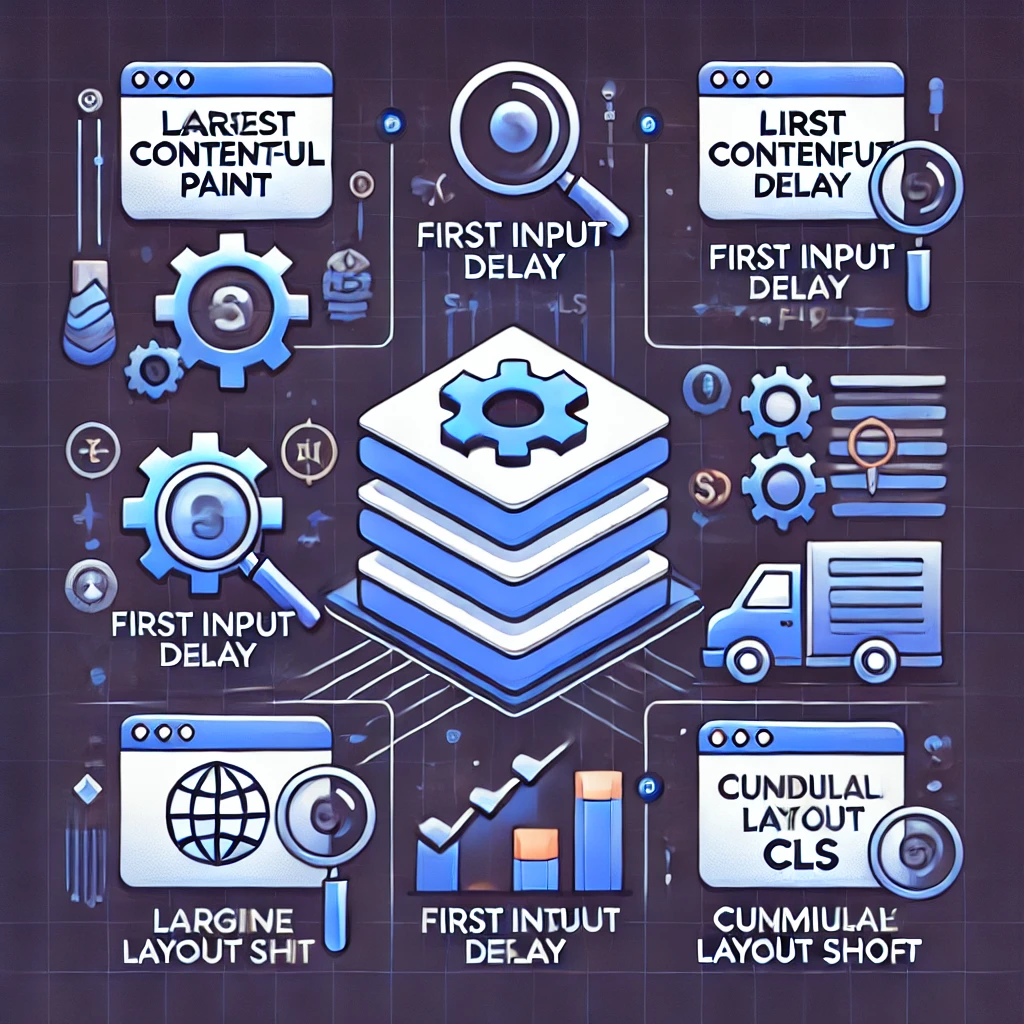
Core Web Vitals are critical performance metrics that Google uses to measure user experience. These include:

  • Largest Contentful Paint (LCP): Measures loading performance. Aim for 2.5 seconds or faster.
  • First Input Delay (FID): Measures interactivity. Aim for less than 100 milliseconds.
  • Cumulative Layout Shift (CLS): Measures visual stability. Aim for a score of less than 0.1.

Use Google Search Console to track and optimize these metrics.


9. Canonicalization and Duplicate Content

Duplicate content can confuse search engines and negatively affect rankings. Use the rel=canonical tag to indicate the preferred version of a page if duplicate content exists.

The Ultimate Guide to Digital Marketing for Beginners in 2024″

Introduction

Digital marketing is rapidly evolving, making it essential for businesses to stay updated with the latest trends, tools, and strategies. Whether you’re a small business owner, an aspiring marketer, or someone just curious about how digital marketing works, this guide will walk you through the basics, providing the knowledge you need to build an effective digital marketing strategy for 2024.


What is Digital Marketing?

Digital marketing refers to the promotion of products or services using digital technologies, primarily through the internet but also including mobile phones, display advertising, and any other digital medium. Unlike traditional marketing methods, digital marketing allows businesses to reach a global audience in a cost-effective and measurable way.

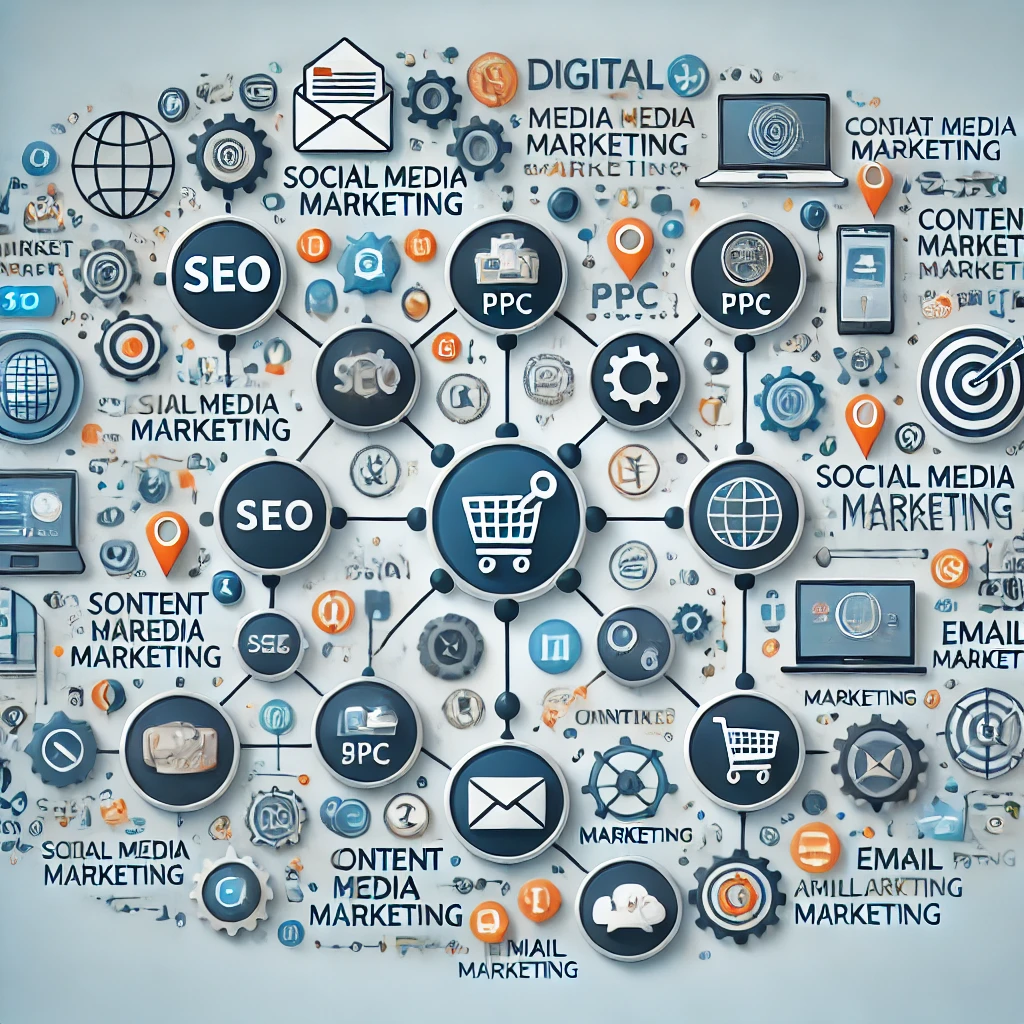
Key Components of Digital Marketing:

  • Search Engine Optimization (SEO): Optimizing your content to rank higher on search engines like Google.
  • Content Marketing: Creating valuable content to attract and engage an audience.
  • Social Media Marketing: Promoting your brand through platforms like Facebook, Instagram, LinkedIn, and Twitter.
  • Pay-Per-Click Advertising (PPC): Running ads where advertisers pay each time their ad is clicked.
  • Email Marketing: Communicating with your audience through personalized email campaigns.
  • Affiliate Marketing: Promoting other businesses’ products for a commission.
  • Influencer Marketing: Collaborating with influencers to reach a wider audience.

Why is Digital Marketing Important?

In today’s world, consumers rely heavily on digital channels to find products and services. Digital marketing helps businesses:

  • Reach a larger audience than traditional methods like print ads or TV commercials.
  • Target specific demographics based on interests, location, age, and more.
  • Measure success in real time with analytics tools that provide data on user behavior, traffic, and conversions.
  • Cost-effectiveness, as online campaigns often require less investment than traditional marketing.
  • Build lasting relationships with customers through email marketing, social media, and valuable content.

Digital Marketing Strategies for 2024

To stay competitive, here are the top digital marketing strategies you should focus on in 2024:

1. Content Marketing for Voice Search: With the rise of voice search assistants like Alexa and Google Assistant, optimizing your content for voice queries is crucial. Create conversational, long-tail keyword content to increase your chances of being featured in voice search results.

2. Video Marketing Domination: By 2024, video is expected to account for more than 80% of all internet traffic. Use platforms like YouTube, Instagram Reels, and TikTok to engage your audience. Also, consider live-streaming content for a more interactive experience.

3. Personalization and AI-driven Campaigns: Artificial intelligence (AI) is transforming how businesses approach personalization. Using AI tools, you can analyze customer data to deliver tailored ads, personalized product recommendations, and unique user experiences that improve conversions.

4. Focus on Local SEO: Local SEO is vital for businesses with a physical presence. Google My Business is one of the top tools to ensure local customers can find your business. Ensure your name, address, and phone number (NAP) are consistent across platforms and encourage customer reviews.

5. Interactive Content: Content like quizzes, polls, and interactive videos encourages user engagement. Interactive content not only helps with engagement but also collects valuable data about your audience’s preferences.


SEO Best Practices for 2024

To ensure your digital marketing strategy is effective, you need to focus on SEO best practices:

1. Mobile Optimization: More than 50% of global web traffic comes from mobile devices. Your website must be responsive, load quickly on mobile devices, and provide a seamless user experience.

2. E-A-T: Expertise, Authoritativeness, and Trustworthiness: Google emphasizes content quality with its E-A-T principle. Make sure your content is informative, well-researched, and includes reputable sources. Building backlinks from authoritative websites also boosts your site’s credibility.

3. Featured Snippets and Zero-Click Searches: Optimize your content for featured snippets (the content box at the top of some search results) by providing clear, concise answers to commonly searched questions. This improves your chances of ranking at the top without users having to click through.

4. Structured Data: Implement structured data (also known as schema markup) to help search engines understand the content on your website better. This can enhance your appearance in search results with rich snippets, improving your CTR (click-through rate).


The Role of Social Media in Digital Marketing

Social media platforms continue to evolve as powerful marketing tools. Here’s how businesses should approach social media in 2024:

  • Instagram and TikTok for Younger Audiences: These platforms remain dominant for brands targeting millennials and Gen Z. Focus on visually appealing content and user-generated content.
  • LinkedIn for B2B Marketing: LinkedIn is the top platform for business-to-business marketing, offering targeted advertising and networking opportunities.
  • Facebook for Targeted Ads: Despite competition, Facebook’s advertising platform remains one of the most powerful for highly targeted ad campaigns.

Pro Tip: Keep an eye on emerging platforms like Clubhouse and Threads. They might not be mainstream yet, but early adoption can give you a competitive edge.


Email Marketing: Still Relevant in 2024

Email marketing remains one of the most cost-effective forms of digital marketing. In 2024, successful email marketing strategies will be:

  • Personalized and segmented: Use data to segment your audience and send tailored messages.
  • Mobile-friendly: Most users check emails on their phones, so ensure your emails are mobile-optimized.
  • Interactive elements: Include polls, quizzes, or videos in your emails to boost engagement rates.

Measuring Success: Key Digital Marketing Metrics

To gauge the success of your digital marketing efforts, focus on the following key metrics:

  • Website traffic: Track how much traffic your campaigns are driving to your site.
  • Conversion rate: Measure how many visitors are completing desired actions (e.g., purchases, sign-ups).
  • Customer acquisition cost (CAC): Understand how much it costs to acquire a new customer through various marketing efforts.
  • Return on investment (ROI): Track whether your digital marketing campaigns are bringing in more revenue than they cost.